
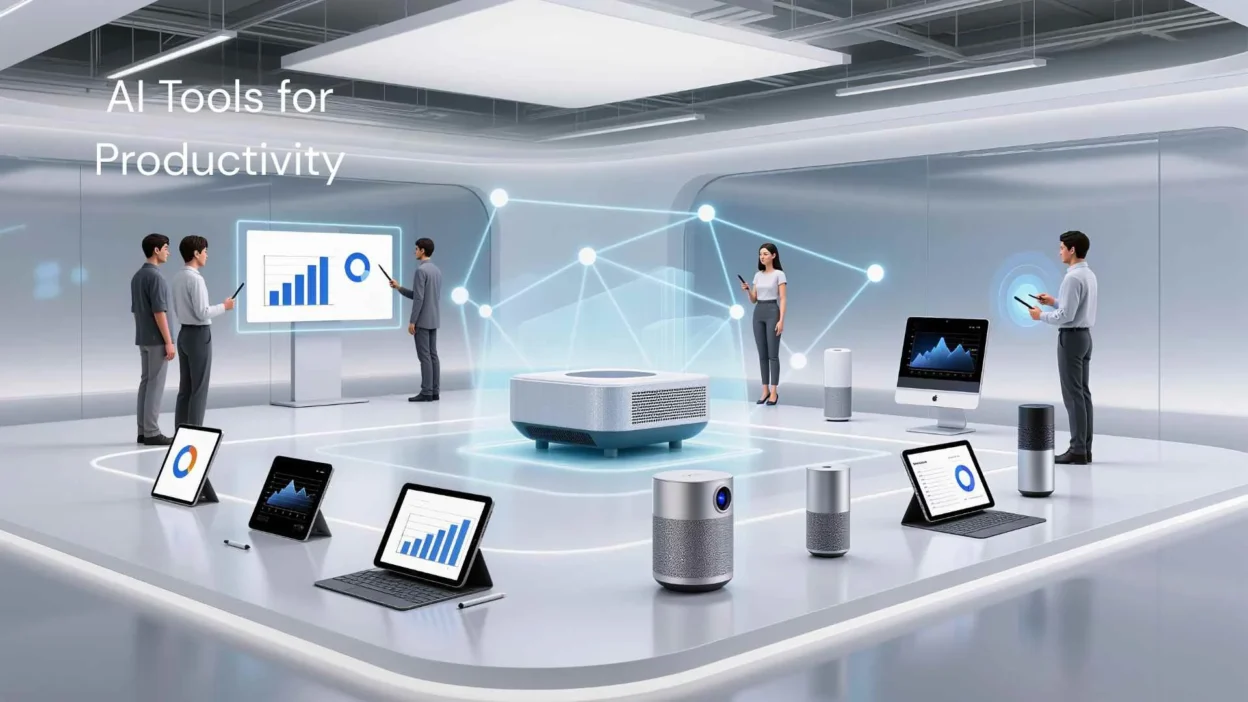
In the modern digital era, productivity has become more than just working harder—it’s about working smarter. With the advent of Artificial Intelligence (AI), tools designed to optimize efficiency, automate tasks, and enhance decision-making are revolutionizing how we work. From managing emails to automating repetitive tasks, AI tools for productivity are now indispensable for professionals, students, and businesses alike.
In this comprehensive guide, we’ll explore the best AI tools, how they boost productivity, practical examples, and strategies to integrate them into your workflow seamlessly.
Why AI Tools Are Essential for Productivity
AI is no longer just a futuristic concept; it’s actively changing workplaces. Here’s why AI tools for productivity matter:
1. Automating Repetitive Tasks
Many professionals spend hours on repetitive tasks like data entry, scheduling, and reporting. AI-powered tools can automate these processes, freeing time for creative and strategic work.
2. Enhancing Decision-Making
AI can analyze large datasets to provide insights that humans may overlook. Tools like predictive analytics and smart dashboards help make better, data-driven decisions.
3. Streamlining Communication
From AI email assistants to chatbots, AI tools reduce the time spent on responding to messages and ensure timely, personalized communication.
4. Personalized Learning and Development
AI-driven platforms can identify skill gaps and suggest learning resources, allowing individuals to improve productivity through self-improvement and upskilling.
Top AI Tools for Productivity in 2025
Here’s a curated list of AI tools that can significantly boost your productivity across various domains:
1. AI Writing Assistants
Writing tasks consume a lot of time, from emails to reports. AI writing assistants like ChatGPT, Jasper, and Grammarly help:
- Generate content quickly
- Proofread and correct grammar errors
- Enhance clarity and tone
Example: Using ChatGPT to draft weekly reports can save hours of manual writing.
2. AI Scheduling Tools
Scheduling meetings can be a tedious process. Tools like Clockwise, x.ai, and Calendly use AI to:
- Find optimal meeting times
- Automatically coordinate with participants
- Reduce back-and-forth emails
Tip: Integrate AI scheduling tools with your calendar for real-time availability updates.
3. AI Project Management Tools
Project management becomes more efficient with AI integration. Platforms like Trello, Asana, and ClickUp offer AI features to:
- Prioritize tasks based on deadlines and workloads
- Predict project delays
- Recommend task assignments
Pro Tip: Use AI task prioritization to ensure your team focuses on high-impact activities.
4. AI-Powered Email Management
Email overload is a major productivity killer. AI tools like Superhuman, SaneBox, and Front can:
- Automatically categorize emails
- Suggest responses
- Highlight high-priority messages
Example: Superhuman uses AI to identify urgent emails, helping you respond faster and more effectively.
5. AI Analytics Tools
For data-driven decision-making, tools like Tableau with AI, Zoho Analytics, and Power BI analyze complex data sets to:
- Detect trends and anomalies
- Generate predictive insights
- Automate reports
Pro Tip: Use AI dashboards to monitor team performance and project KPIs in real-time.
6. AI Personal Assistants
AI personal assistants like Siri, Google Assistant, and Alexa are not just for home use—they boost workplace productivity by:
- Managing tasks and reminders
- Scheduling meetings
- Pulling information on demand
Example: Ask Google Assistant to summarize your day’s schedule while you focus on deep work.
7. AI Tools for Creativity
Creativity is often constrained by time. AI tools like Canva AI, Runway, and DALL·E can:
- Generate visuals, designs, and presentations
- Suggest creative ideas
- Automate repetitive design tasks
Tip: Use AI design tools to create marketing content in minutes rather than hours.
How AI Tools Increase Individual Productivity
Integrating AI into daily workflows can lead to significant improvements in:
Time Management
AI helps prioritize tasks and reduces time spent on menial work, allowing more time for high-value tasks.
Focus and Concentration
By automating notifications and email filtering, AI minimizes distractions and enables deep work.
Collaboration and Teamwork
AI tools streamline communication and project management, helping teams work cohesively, even remotely.
Learning and Skill Development
AI-driven platforms recommend learning paths tailored to your needs, boosting professional growth.
Implementing AI Tools in Your Workflow
To maximize productivity, follow these steps:
- Identify Pain Points: Determine which repetitive or time-consuming tasks can be automated.
- Select the Right Tool: Choose AI tools that align with your needs and team structure.
- Integrate Gradually: Start small to ensure seamless adoption.
- Train Your Team: Conduct workshops and share tutorials for effective usage.
- Monitor and Optimize: Track performance metrics and adjust tool usage accordingly.
Pro Tip: Keep a balance—AI should enhance human productivity, not replace critical thinking.
Challenges of Using AI for Productivity
While AI tools are powerful, they come with challenges:
- Over-reliance on AI: Relying too heavily on AI can stifle creativity.
- Data Privacy Concerns: AI tools often require access to sensitive data.
- Learning Curve: Teams may need training to fully utilize AI tools.
- Cost: Some AI productivity tools require subscriptions, which may add up.
Tip: Always evaluate ROI before fully committing to a tool.
Future Trends in AI for Productivity
The future of AI-driven productivity is promising:
- AI-Powered Virtual Workspaces: Fully automated digital workspaces will manage projects, meetings, and communication.
- Predictive Productivity: AI will anticipate workflow bottlenecks and suggest proactive measures.
- Emotion-Aware AI Assistants: AI will adapt responses based on user emotions to improve collaboration.
- Integration with IoT: AI will optimize productivity across smart devices in the workplace.
Conclusion
The landscape of work is evolving rapidly, and AI tools for productivity are at the forefront of this transformation. From automating mundane tasks to enhancing creativity and decision-making, AI empowers individuals and organizations to achieve more in less time.
Whether you are a professional seeking efficiency, a student balancing multiple responsibilities, or a business aiming to streamline operations, embracing AI productivity tools is no longer optional—it’s essential.

I’m Halen Quantrex, founder of quotetypes.com, and I write meaningful, modern quotes to help people express their feelings with ease. My goal is to make every line relatable, uplifting, and easy to share.